
Strengthening IT as a Business Partner: How Vetropack is Advancing Management and Collaboration with Bee360
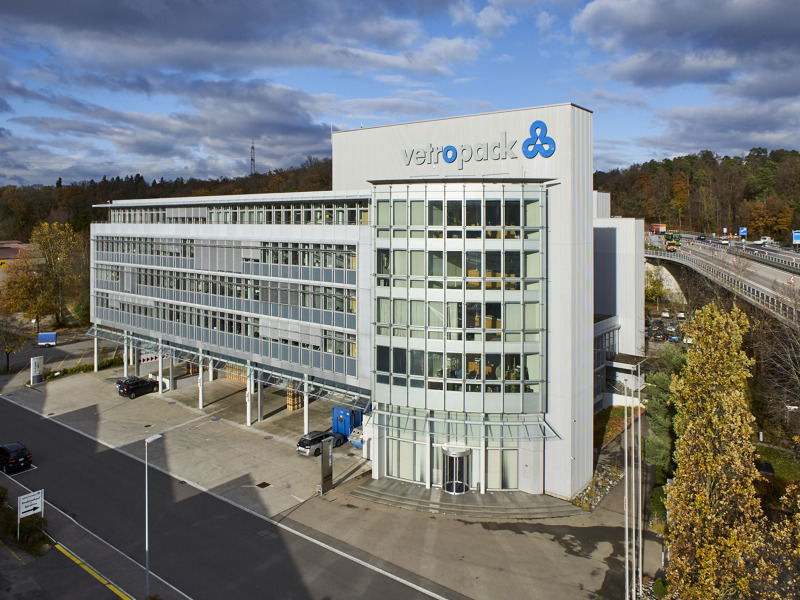
Industry Glass Packaging · HQ Bülach, Switzerland
Overview
Challenge
Further enhance transparency, controllability, and strategic alignment of IT & OT; integrated management of finances, capacity, and demand; positioning IT as an active business partner.
Solution
Bee360 as a central platform for IT governance, portfolio, and resource management — integrated with SAP.
Result
Data-driven decisions, improved manageability and prioritization, strengthened position of IT within the company, higher satisfaction across the business.
About Vetropack
The Vetropack Group is one of Europe's leading manufacturers of glass packaging for the food and beverage industry. With approximately 3,600 employees, the company operates modern production facilities as well as distribution and sales offices in Switzerland, Austria, the Czech Republic, Croatia, Slovakia, Ukraine, Italy, Moldova, and Romania.
Throughout its more than 100-year history, the group has repeatedly adapted successfully to new market conditions, technological developments, and societal changes. Shaping change is second nature at Vetropack. This mindset also shapes the company's current course.
Digitalization is changing the role of IT
With increasing digitalization and the growing importance of Operational Technology (OT), it has become clear that Information Technology (IT) plays a key role in the company's future viability. Production processes, data flows, and business decisions are now more closely intertwined than ever before. IT and OT are converging to form the backbone of efficient, secure, and sustainable value creation.

Challenge
Expanding transparency and management capabilities
Against the backdrop of increasing complexity, it became clear that transparency, structure, and strategic management tools needed to be further developed in a targeted manner. To drive this transformation forward, Vetropack appointed Wolfram Schulze as its new CIO in April 2024. With his appointment, he assumed responsibility not only for traditional IT operations but also for the OT process technology landscape, with the aim of further developing existing models and managing IT and production-related technologies in a more integrated manner.
This entailed requirements such as 24/7 availability, high stability, real-time data, and bridging the gap between the different work cultures of IT and manufacturing.
IT Takes a Prominent Role in Corporate Management
At Vetropack, the CIO's role is closely integrated into corporate management and forms part of the extended executive board. This signals that IT is viewed as a strategic success factor at Vetropack. With the new reporting structure, IT has been placed on the same level as the company's core value-added areas. This creates the conditions for IT to now act as a partner that actively contributes to business development and helps shape the company's digital transformation.

A Clear Vision as the Foundation for Growth
Upon joining the company, Wolfram Schulze set a clear strategic agenda: IT was to develop a shared mission, align its three divisions—Infrastructure, Enterprise Applications, and Factory IT—as an integrated unit, and establish transparency regarding budgets, capacities, architectures, and licenses as the basis for management.
The goal was an IT department that not only delivers technically but also actively acts as a strategic partner to the business: with clear governance, structured capacity planning, and coordinated use of external service providers. This required common processes, uniform standards, and a management platform that connects all divisions.
A key priority was the standardization of the system landscape: the goal was to harmonize the system landscape more closely and manage it with clear architectural control.
Another focus was on further expanding transparency, clear processes, and a shared understanding. Innovation for innovation's sake would have led nowhere in this situation.
Wolfram Schulze formulated a clear, two-step roadmap: By 2027, Vetropack IT&OT aims to reach the maturity level of a professional IT service provider, fully in line with the principle of "Run IT like a Business."
This entailed a fundamental cultural shift. IT should learn to manage its own services like a business, with clearly defined offerings, traceable cost structures, and transparent performance metrics. Instead of merely reacting to requirements, it should actively design, prioritize, and professionally manage its services. This included realistically planning capacities, clearly defining responsibilities, and strategically expanding internal consulting expertise. On this basis, IT is set to become a true business driver by 2030, directly influencing revenue, value creation, and customer value through digitally enabled products and services.
The First Step
IT Reorganization
One of his first steps was a complete redesign of the IT organization, from its mission to its role architecture. Based on the Gartner IT Operating Model, Wolfram Schulze defined the mission, structures, roles, and competencies that IT would need in the future to operate professionally. This provided employees with direction, perspective, and purpose. Everyone knew what role they were currently fulfilling, where that role was headed, and what support—such as coaching or training—was planned along the way. The leadership team was strengthened with targeted hires to ensure active, proactive leadership at all levels.
A management platform as an essential foundation
Once the organizational foundations were in place, the next step was to establish the technical foundation for transparency and management. "Digitalization and innovation without a reliable data foundation would be a waste of time," explains Wolfram Schulze. "What was missing was a tool that would provide a clear view of finances, capacities, and demand as the basis for all further decisions."
With this realization, the search for a suitable solution began. However, the CIO deliberately chose not to start a traditional tool selection process, but rather to first understand what integrated management of IT and OT should look like. He had encountered Bee360 a few years earlier at a trade conference, though at the time in a different professional context and without an immediate need; nevertheless, the holistic approach had stuck with him.
Wolfram Schulze approached the renewed discussions with Bee360 with a deliberate tool-agnostic mindset. "I wasn't interested in a product demo, but rather in a professional exchange of ideas and best practices," he explains. "From the very beginning, I made it clear that I didn't want to buy a tool, but rather to understand how modern IT management works holistically." Together with Bee360, he organized workshops in which the target vision for the future IT organization was first developed completely independently of technology: Where do we stand today? Where is there potential for further development in the existing model? Where do we want to go, and what do we need to get there?

Solution: Bee360
Quick Results Over Perfection
To achieve his vision, Wolfram Schulze adopted a pragmatic approach. "We had to let go of the idea that perfection is the benchmark," says the CIO. "It was more important to quickly move from zero to a functioning standard, following the principle of 'Embrace Imperfection."
This mindset was also reflected in the choice of tool. "We didn't want another costly tool that wouldn't be used in day-to-day operations," explains Wolfram Schulze. "The key was that the tool be truly integrated into daily operations and deliver real management benefits—not technical depth for its own sake."
"Bee360 won us over not through maximum depth in individual functional areas, but through breadth, consistency, and ease of use," the CIO continues. "It was important to me that the tool takes us by the hand, delivers results quickly, and doesn't require endless customization. I'd rather have 70 percent of the feature set that we actually use than 100 percent perfection that nobody uses in day-to-day operations."
Agile Rollout with Clear Priorities
The CIO had clearly defined the timeline from the very beginning. Capacity and financial management were to be fully established by the end of Q4, with demand management to follow by the end of Q1 of the following year. "We deliberately took an agile approach," explains Wolfram Schulze. "There was a timeline, but the scope was defined based on our actual capabilities. So, what can we achieve with our existing resources, where do we need consulting, and how much time will go into operational implementation?" Despite the project's complexity, Vetropack stayed on track. Minor deviations remained marginal.
The implementation of the finance and capacity modules went particularly well, with both being rolled out almost entirely on schedule.
The implementation of Bee360 proceeded consistently in line with these predefined priorities. The system was rolled out step by step, initially focusing on data transparency, then on structure and processes. Bee360 supported Vetropack throughout this process with a methodical implementation approach, ranging from the capture of master and metadata to training and the active involvement of employees in the change process.
Leadership and Change as a Key to Success
Change management was a central element of this process. First, the relevant stakeholders were identified, ranging from IT and Human Resources to the line departments. This was followed by a broad-based information and training phase, organized in collaboration with Bee360. Transparency played a crucial role in this process. The goal was to clarify who would be affected, what benefits the new system would bring, and how it would change daily work.
Training sessions were tailored to specific topics and target groups. While the finance module initially focused primarily on the leadership team—since many employees had previously had little exposure to contracts or budget processes—the topic of capacity management affected nearly everyone. Bee360 provided support through tool demos, documentation, and customized use cases, while Vetropack organized internal Q&A sessions to address questions directly.


Seamless integration with the corporate ERP/SAP
The operations and infrastructure strategy follows a "SaaS first" approach. SAP (Procurement, Invoicing) serves as the primary data source. Planning, management, and reporting are consistently handled in Bee360.
This ensures that costs, services, and demands are available in a domain-specific and consistent manner and flow directly from Bee360—without media breaks or manual reconciliations—into budget planning.
Budget Management with Clarity and Prioritization
In Bee360, cost planning is structured by domain, service, and cost center, enabling targeted rather than arbitrary budget optimization. The focus is on securing the core business. Ongoing services ("Run" or "Keep the lights on") remain unaffected, while adjustments are first applied to planned changes and projects. The transparency created in Bee360 allows services—such as add-ons or licensing requirements—to be systematically reviewed, and well-founded decisions on optimizations to be made in collaboration with the business units.
Unified Governance Instead of Parallel Worlds
To ensure consistent management processes, the Digital Governance unit was established. It ensures that all standard processes are consistently integrated into Bee360. Every IT change traces back to its origin (incident or demand), architectural changes are documented throughout the lifecycle, and adjustments in vendor management are visible in real time. The CIO's guideline is clear: "If it's not documented in the system, it doesn't exist." Bee360 thus serves not as a data repository but as a central working environment and is indispensable in daily operations.
Joint prioritization across IT and business units
With IT business partners (IT side) and business process champions (domains), requirements are placed within the strategic context. There is regular demand forecasting across regions and business units. Overlaps and deviations from the target state are identified early and managed. Bee360 enables this process through transparency and clear accountability. As a result, IT's ability to deliver and provide insights to the business has significantly increased, and IT/business alignment has been noticeably strengthened.
Results
New Transparency Regarding Workload and Resources
With the introduction of Bee360, Vetropack has created new transparency, particularly in capacity management. However, this new perspective on workload and resource utilization also shows that data alone is not enough. Managers must learn to actively work with the insights gained.
Data-Driven Decision-Making
According to the CIO, Bee360 has proven to be far more than just a reporting or time-tracking system: "It is a management tool that enables data-driven decisions and transforms collaboration between IT and business units." "The goal is to identify patterns and prevent bottlenecks early on."
Financial Transparency in the Context of Services
While capacity management is becoming even more firmly embedded in the organization, Bee360 has already established itself as a game-changer in financial management. "Today, I receive all relevant financial data not in isolation from SAP, but integrated into Bee360, directly in the context of our services, projects, and domains," explains Wolfram Schulze. "This has fundamentally changed our collaboration with Controlling and given IT enormous credibility."
Joint Prioritization Across Domains
Vetropack was also able to make rapid progress in demand management. "Today, we have a clear, structured overview of priorities and interdependencies," explains the CIO. A key factor in this success was the introduction of the IT business partner concept. IT business partners work closely with business process champions in the line of business. This ensures that requirements are not developed in isolation, but within the overall strategic context of the respective domain.
Fact-based collaboration between IT and business
"Bee360 is therefore not just a tool for us, but an enabler for collaboration between IT and business," emphasizes Wolfram Schulze. "The system supports our governance, creates transparency, clearly defines responsibilities, and enables data-driven prioritization."
Today, regular demand forecasting takes place, during which regions and business units submit their requirements in a structured manner. This allows overlaps and deviations from the overall strategy to be identified early on based on shared data rather than individual assessments.
Bee360 supports the further development of IT maturity and promotes data-driven collaboration between IT and business
With Bee360, IT has achieved a level of maturity within a year that, according to Gartner, typically takes companies three to five years to reach.
~100%
Financial management maturity
within one year
80–90%
Demand management maturity
within one year
1 year
vs. 3–5 year Gartner benchmark
time to maturity
Collaboration between IT and the business has clearly evolved. Discussions are now based on shared data, not on individual assessments. "We present the numbers today—and that changes the perception of IT throughout the entire company," the CIO summarizes.
From a financial perspective, too, the decision to adopt Bee360 has clearly paid off. Already in the first year of implementation, licensing costs were on par with those of the previous EAM tool, while the scope of functionality was significantly greater and tangible strategic value was achieved. The implementation went smoothly; time-consuming data searches and manual Excel loops are a thing of the past. The investment paid for itself quickly. What used to take a lot of time and effort is now available at the push of a button.
"Today, we can access this information much more quickly and in a more structured way," the CIO summarizes.
Wolfram Schulze particularly highlights the collaborative partnership with Bee360: "At no point have I encountered those typical sales tactics that come from the completely wrong direction. From the very beginning, I've seen Bee360 as an equal partner who is authentic, principled, and genuinely interested in our success."
Vetropack plans to also utilize Bee360 for strategic planning and program management in the future. The goal is to demonstrate how IT initiatives directly contribute to the corporate strategy.
Contact
Do you have any questions? Feel free to contact us!

Bee360 is an independent, internationally active company headquartered in Karlsruhe, Germany, with additional offices worldwide. Since 2003, we have been offering management consulting and enterprise-wide solutions for international corporations and renowned medium-sized companies based on our platform of the same name, Bee360. This globally unique platform for the holistic management of an organization serves all relevant functions and business areas and brings them together at the appropriate level. This creates a shared view of company operations—for all employees of the organization.
Meeting buchen